2026-10-24 ·
Hidden Water Damage Signs in Holladay Basements After Summer Storms
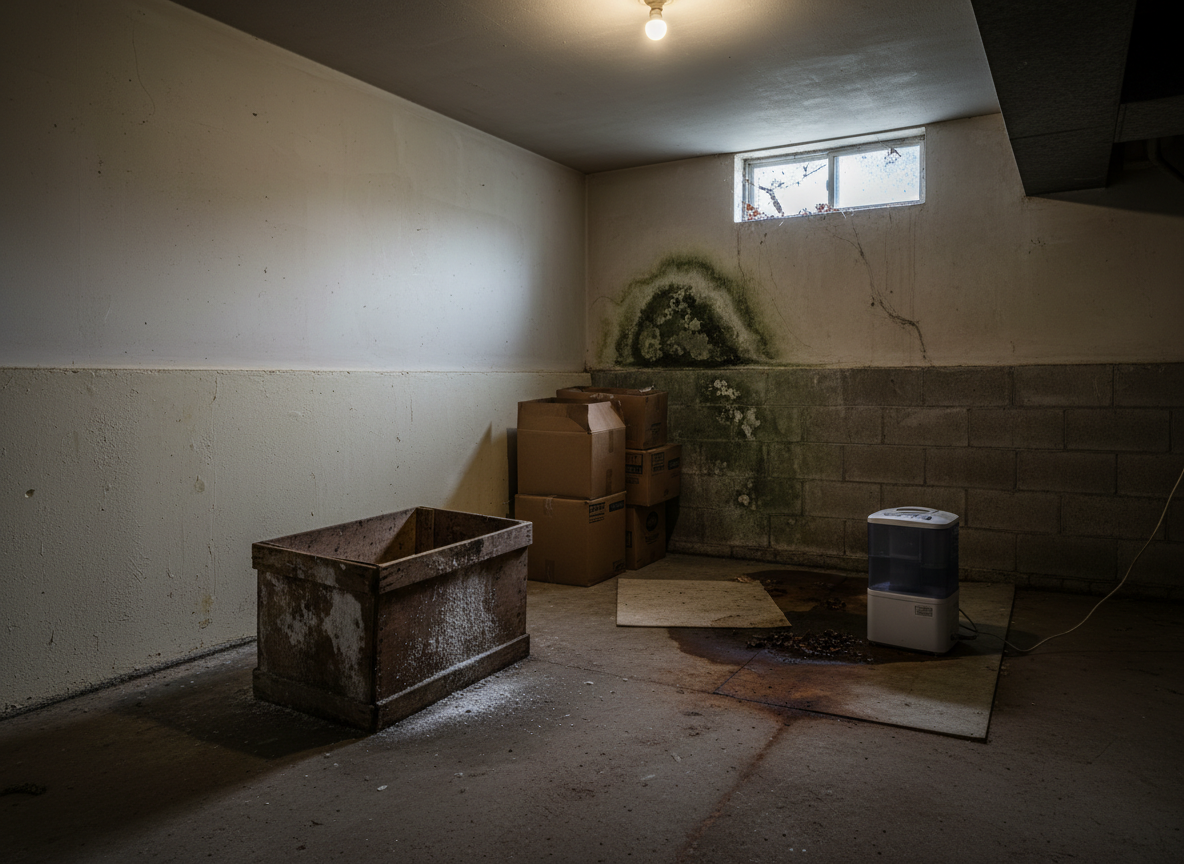
Summer storms in Holladay's semi-arid climate drop heavy rain quickly on older homes with basements in neighborhoods like Holladay Village and Mount Olympus, allowing water to seep through foundations before residents notice. Hidden signs typically emerge within 48 hours as faint discoloration on concrete walls or slight mustiness near floor drains, especially in homes built before 1980 that lack modern waterproofing. These indicators differ from winter freeze-thaw issues because summer runoff from Olympus Hills Park slopes pools against south-facing walls in Cottonwood Heights and Millcreek borders.
Common Entry Points for Storm Water in Holladay Basements
Holladay basements in Salt Lake County often see water enter through cracks in poured concrete foundations or around window wells after intense summer downpours. Homes near Holladay City Park and in the Cottonwood area sit on soil that drains slowly once saturated, pushing moisture upward through slab joints. In Mount Olympus neighborhoods, hillside runoff channels water toward lower-level utility rooms where sump pumps may lag during brief but heavy events. Residents should check the perimeter where exterior grading slopes toward the house, a common issue in East Holladay properties developed in the 1960s and 1970s. Basement flood cleanup addresses these entry points before moisture travels into finished spaces.
Visual Indicators of Hidden Damage
Look for light brown staining along baseboards or faint white efflorescence on walls that appears days after storms pass through Holladay. In older Mount Olympus homes, drywall near floor level may bubble slightly or show tape lines darkening from behind. Cottonwood Heights basements frequently develop hairline cracks in corners where soil expansion from summer moisture stresses the structure. These signs stay hidden behind storage or carpet until paint begins to peel or base trim warps. Checking with a flashlight along the north and east walls catches issues early in neighborhoods like Willow Creek where tree cover keeps areas shaded and damp longer.
Odor and Air Quality Clues
A persistent earthy or metallic smell in Holladay basements after summer storms signals trapped moisture that standard fans miss. This odor intensifies in closed spaces near Olympus Hills Park where humidity lingers due to the area's tree canopy. In East Holladay homes, musty air often concentrates around HVAC returns if water reached ductwork during runoff events. Residents notice it most when entering from upper floors because cooler basement air holds the scent. Mold remediation after water damage becomes necessary once these odors persist beyond a week, particularly in Salt Lake County homes with limited ventilation.
Long-Term Structural Concerns
Unchecked moisture in Holladay basements weakens floor joists over multiple storm seasons, especially in 1950s-1970s stock common throughout Mount Olympus and Knudsen Corner. Wood framing absorbs water from repeated summer events and loses strength faster than in drier climates. Salt Lake County soil shifts create new foundation cracks each year, allowing more water during the next storm. Homeowners in Cottonwood Heights see this progression when doors begin sticking or floors slope toward one corner. Preventing mold after heavy rains in Holladay's older neighborhoods outlines steps that protect these structural elements before costs rise.
When to Call for Professional Assessment
Schedule an inspection if any sign appears within 72 hours of a storm, as hidden damage spreads quickly in Holladay's variable summer weather. Properties in Millcreek and near Salt Lake City limits often need extraction equipment that reaches behind walls without full demolition. Water damage mitigation teams familiar with local terrain use moisture meters to map affected zones that visual checks miss. Acting before the next cold snap prevents freeze expansion from widening existing cracks in older foundations.