2026-10-24 ·
How Spring Snowmelt Affects Homes Near Mill Creek Canyon in Holladay
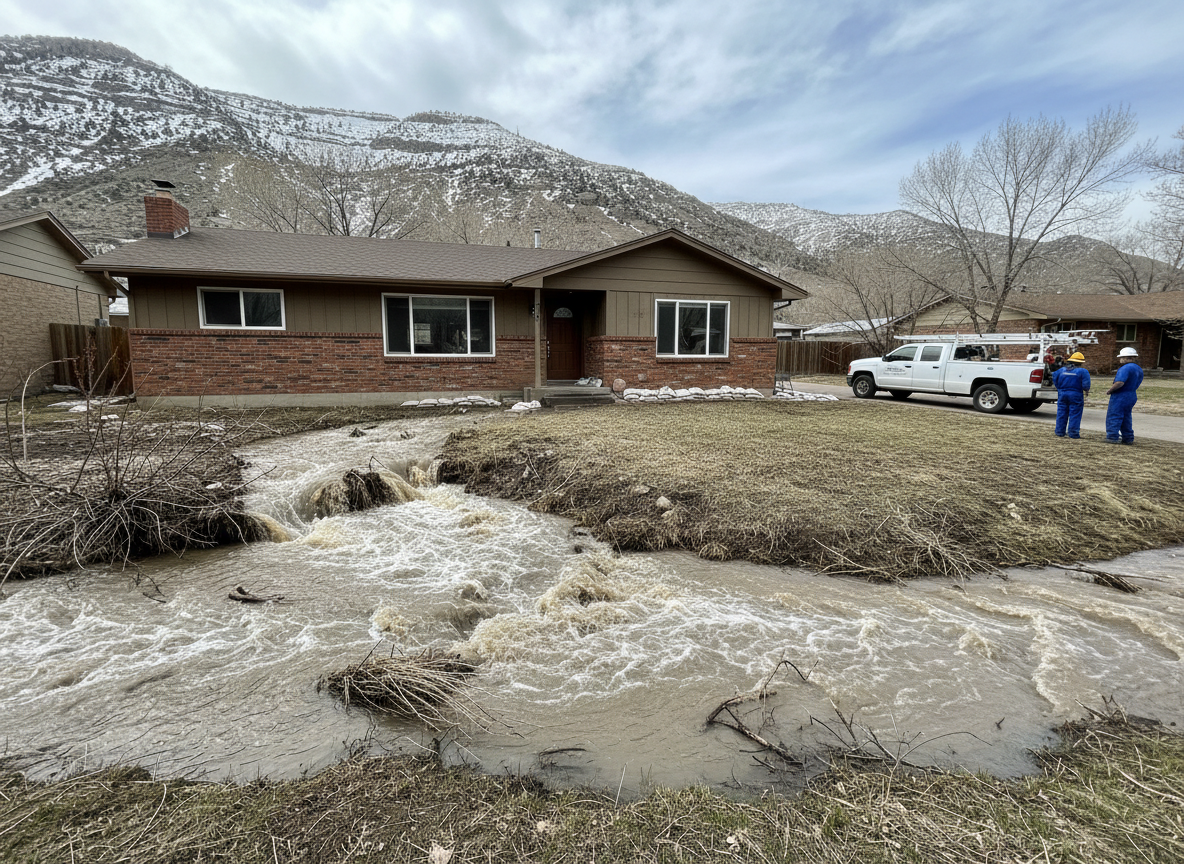
Spring snowmelt from Mill Creek Canyon pushes extra surface water and raises local groundwater levels across Holladay, especially in lower-lying spots near the canyon mouth and along drainage paths that reach into Mount Olympus and East Holladay streets. The semi-arid climate produces cold, snowy winters that leave deep snowpack on the benches above town, then rapid warming in March and April sends that water downhill faster than older storm drains can handle. Foundations built before modern waterproofing codes absorb moisture through cracks and porous concrete, while yards slope toward basements in many 1960s and 1970s homes common in these neighborhoods.
Runoff Paths from Mill Creek Canyon
Mill Creek Canyon funnels meltwater along natural draws that cross into Holladay and continue toward Millcreek. When snow depth on the upper slopes exceeds typical winter accumulation, the resulting flow crosses roads and lawns before it reaches storm inlets along Highland Drive. Homes on the east side of Holladay Village and near Olympus Hills Park sit directly in these paths, so water pools against foundation walls for days after the main melt event. Older split-level and rambler homes in these blocks often lack French drains or proper grading, letting water reach sill plates and subfloor framing before residents notice.
Effects on Foundations and Basements
Elevated groundwater during the melt season seeps through basement walls in homes near the canyon, particularly where soil is clay-heavy and drains slowly. This moisture creates damp conditions that reach crawl spaces in Mount Olympus and Cottonwood Heights border streets, softening wood and drywall over several weeks. Homeowners in Salt Lake County see the same pattern repeat when overnight lows stay below freezing while daytime highs push into the 50s, creating freeze-thaw cycles that widen small foundation cracks. Without prompt water extraction, standing water in a basement can affect electrical outlets and HVAC equipment located below grade.
Practical Steps After the Melt
Check grading around the house so water flows away from the foundation at a minimum 6-inch drop over the first 10 feet. Clear debris from gutters and downspout extensions before the next warm spell to keep roof runoff from adding to ground saturation. For properties already showing damp spots, water damage mitigation performed early prevents mold growth that can appear within 48 hours in insulated walls. Residents in East Millcreek and nearby Holladay blocks often schedule inspections right after the main melt period ends to catch hidden moisture behind baseboards or under carpet padding.
When to Call for Extraction
If water reaches more than a few inches in a basement or crawl space, professional water extraction removes the bulk before it migrates into finished areas. Technicians familiar with Salt Lake County soil conditions know how to place drying equipment so air moves through the structure without spreading spores to upper floors. Linking this work to later mold checks keeps the job contained and avoids repeated visits once summer heat returns.