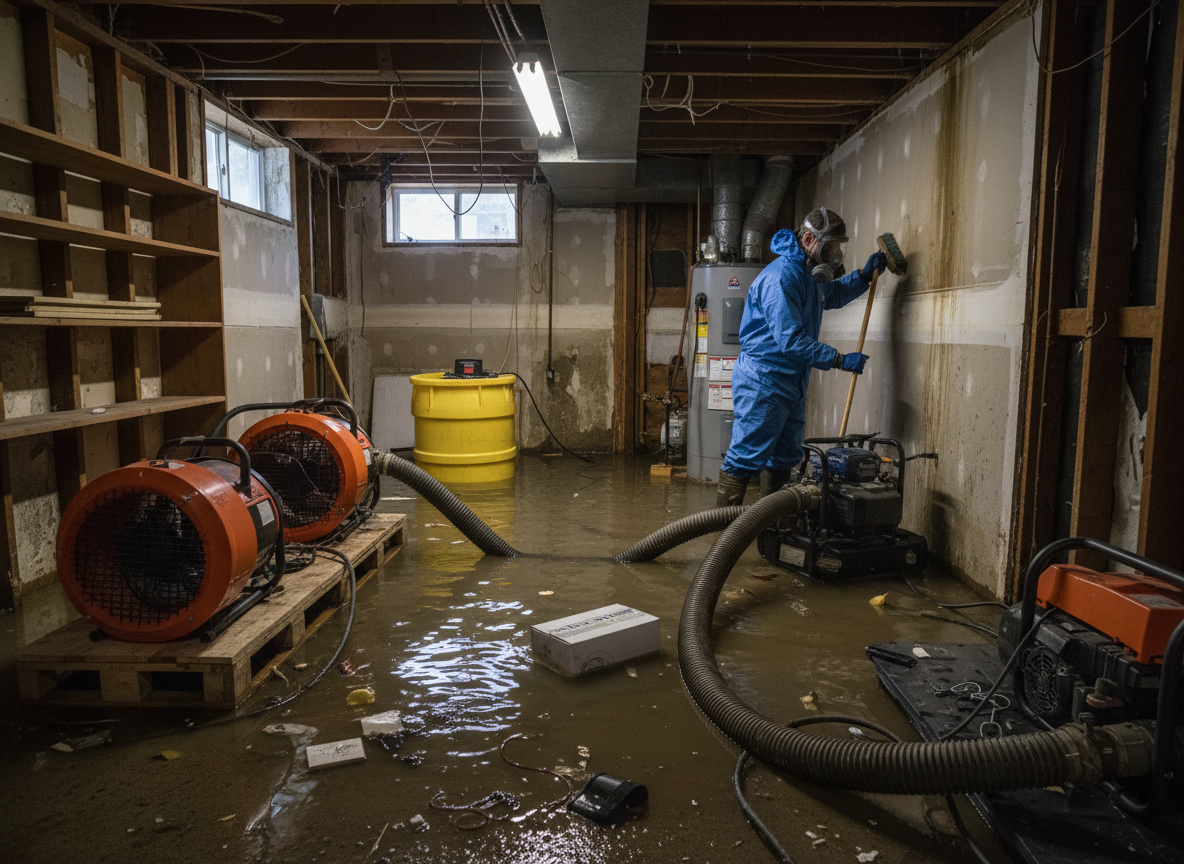
Holladay basements in neighborhoods like Mount Olympus and Cottonwood often flood from snowmelt seeping through foundations during spring thaws after cold winters. Older homes near Holladay Village frequently feature concrete block walls and slab-on-grade construction that trap water against clay-heavy soils common in Salt Lake County, slowing natural drainage and raising hidden moisture risks behind finishes. We extract standing water with submersible pumps sized for the volume, then use moisture meters to map saturation in drywall and flooring before targeted demolition.
Semi-arid summers here can mask ongoing issues because low humidity speeds surface drying while sub-slab moisture lingers, leading to musty odors or warped hardwood in adjacent rooms. Properties bordering Olympus Hills Park sit on slight slopes where runoff concentrates at lower foundations, so we install temporary barriers and monitor for cross-contamination into HVAC systems. Edge cases include sewage backups from overloaded municipal lines during heavy snow events, requiring separate containment protocols to protect occupants.
We document conditions with photos for insurance adjusters and follow local permitting rules for any electrical or plumbing repairs uncovered during cleanup. In Millcreek and Cottonwood Heights homes we also check for radon system interference when removing wet insulation, since many older Salt Lake County basements were retrofitted in the 1990s. Thorough drying with air movers and dehumidifiers continues until readings drop below 15 percent moisture content to prevent secondary mold growth.
Technician insight
In Holladay, the thing that catches most people out with Basement flood cleanup is how the clay soil around Mount Olympus holds meltwater against 1960s-era foundations long after the snow stops, so homeowners often stop drying too soon and hidden pockets later cause musty smells in finished rooms.
Spring Snowmelt Intrusion Near Holladay City Park
A Cottonwood homeowner noticed water rising in their finished basement after a rapid warm spell. We traced the source to a cracked foundation joint allowing meltwater to pool under the slab. Extraction, targeted drying, and antimicrobial treatment restored the space without mold returning the following season.
How it works
- 1
Emergency Response
Technician arrives within hours, shuts off water sources if active, and sets up containment to protect unaffected areas of the Holladay home.
- 2
Water Extraction
Industrial pumps and vacuums remove standing water and saturated materials while documenting depth and affected square footage for the insurance claim.
- 3
Moisture Mapping and Drying
Thermal imaging and meters locate hidden moisture in walls and floors; air movers and dehumidifiers run until readings meet industry standards.
- 4
Sanitizing and Restoration Prep
Antimicrobial treatment on affected surfaces followed by removal of unsalvageable materials so the basement is ready for repairs.
Pricing
Upfront quotes after on-site inspection; final cost depends on water volume, drying duration, and whether sewage or structural complications appear in older Salt Lake County homes.