2026-10-24 ·
Preventing Mold After Heavy Rains in Holladay's Older Neighborhoods
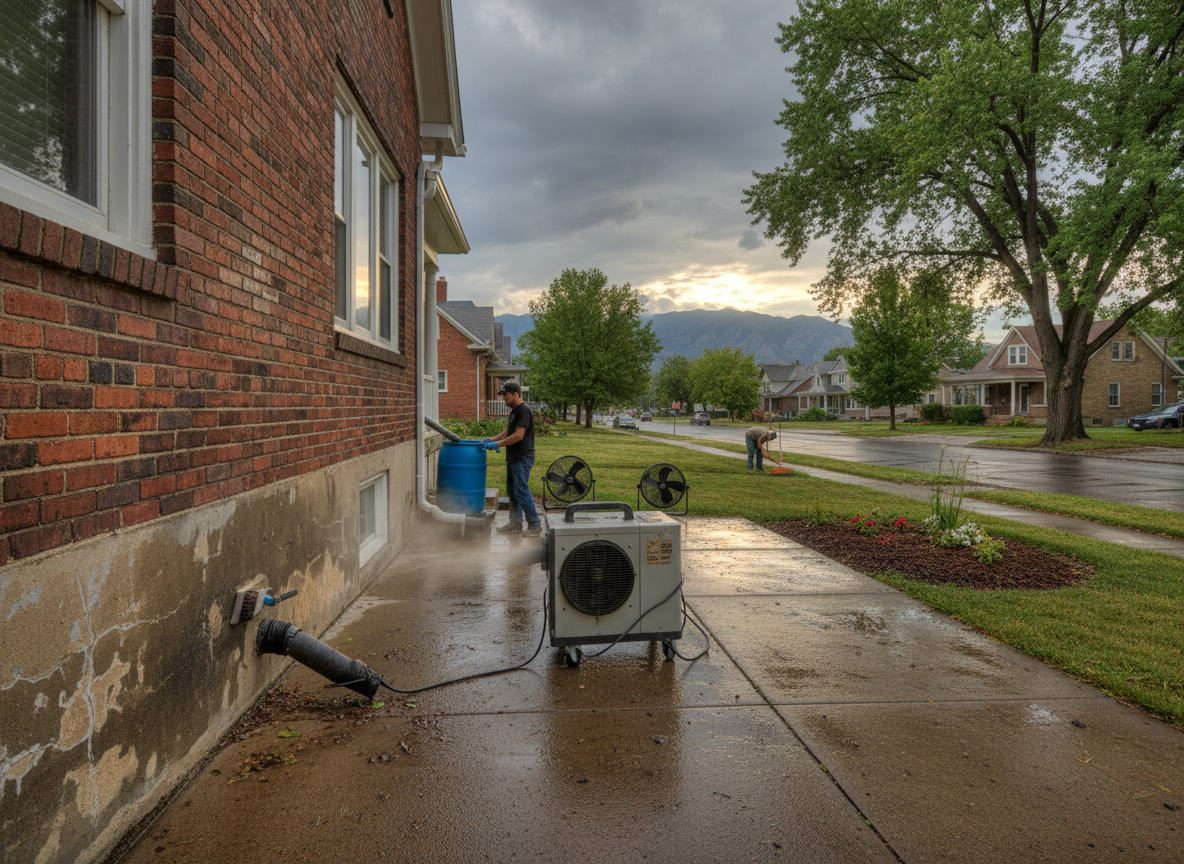
Acting within the first 48 hours after heavy rains prevents mold growth in Holladay's older neighborhoods such as Holladay Village and Mount Olympus. Homes built before 1970 in these areas often have stone foundations and limited ventilation that trap moisture from Salt Lake County's semi-arid climate, where sudden downpours follow long dry spells. Residents near Holladay City Park and Olympus Hills Park see water collect along slopes that feed into lower lots, raising humidity in unfinished basements and crawl spaces. Prompt removal of standing water and focused drying of wood framing and insulation keeps spores from colonizing within 24 to 72 hours.
How Holladay's Terrain and Housing Stock Affect Moisture
Holladay sits on the bench of the Wasatch Mountains where runoff from Mount Olympus and Cottonwood Heights flows toward lower streets in Millcreek and Salt Lake City. Older homes in East Holladay and Knudsen Corner typically feature full basements with unsealed concrete and minimal French drains. These conditions let rainwater migrate under slabs and into joist bays during the cold snowy winters when freeze-thaw cycles open new cracks. Hot summers then accelerate evaporation that pushes moisture upward into living spaces. Checking sump pits and grading soil away from foundations at least 6 inches over 10 feet reduces repeated saturation that older stock cannot shed quickly.
First 48 Hours: Water Removal and Initial Drying
Begin by extracting visible water with a wet vac or submersible pump before it soaks deeper into subfloors. Open windows on opposite walls to create cross-ventilation while running box fans angled toward doorways. Place dehumidifiers set to 45 percent relative humidity in the lowest level and empty them every 4 to 6 hours. In homes around Oakwood Hills and Willow Creek, where basements often sit partially below grade, focus airflow under stairwells and behind finished walls. Remove wet carpet pads within 24 hours because they hold water against hardwood that can cup permanently. Emergency water removal crews familiar with these patterns can reach hidden pockets behind plaster that homeowners miss.
Monitoring Hidden Areas in Older Construction
Older neighborhoods contain lath-and-plaster walls and balloon framing that hide moisture for weeks. Use a moisture meter to test baseboards and sill plates at multiple points; readings above 15 percent warrant further investigation. Check behind appliances in kitchens and bathrooms where pipes run through exterior walls exposed to winter wind. In properties near Springfield and Mount Aire, attic insulation often conceals roof leaks that drip during summer storms. Schedule a follow-up inspection 7 to 10 days after the rain to catch any rebound humidity. Hidden water damage signs in Holladay basements after summer storms outlines common locations that continue to feed mold long after the weather clears.
Long-Term Prevention Steps for Salt Lake County Homes
Install vapor barriers on crawl space dirt floors and seal foundation walls with masonry waterproofing to handle the region's 15 to 20 inches of annual precipitation concentrated in short events. Clean gutters and extend downspouts at least 5 feet from the house to keep water away from older footings. Add battery backup to sump pumps because power outages during storms are common in Holladay Village. For homes in Big Cottonwood and Little Cottonwood canyons that experience rapid snowmelt, consider French drain retrofits that tie into existing storm lines. These measures reduce the frequency of saturation that leads to repeated mold calls in neighborhoods built between 1940 and 1965.
When to Call for Professional Assessment
If moisture readings remain elevated after 72 hours of drying or musty odors appear, professional evaluation prevents hidden colonies from spreading into HVAC systems. Technicians can map affected square footage and isolate zones without disturbing finished surfaces. Mold remediation after water damage addresses the specific materials found in Holladay's mid-century stock. Homeowners in Cottonwood Heights and East Millcreek often combine this step with water damage mitigation to restore insulation and subfloors before winter sets in. Keeping records of drying times and meter readings helps track patterns unique to each property's exposure.