Holladay homes built before 1980 in Holladay Village and near Mount Olympus often have slab-on-grade foundations and older supply lines that fail during the freeze-thaw cycles common in Salt Lake County winters. When a pipe bursts, water travels under tile or hardwood and into wall cavities; we map moisture with pin and pinless meters rather than guessing, then pull baseboards to create airflow paths that reach the wet framing before mold sets in during the humid weeks after snowmelt.
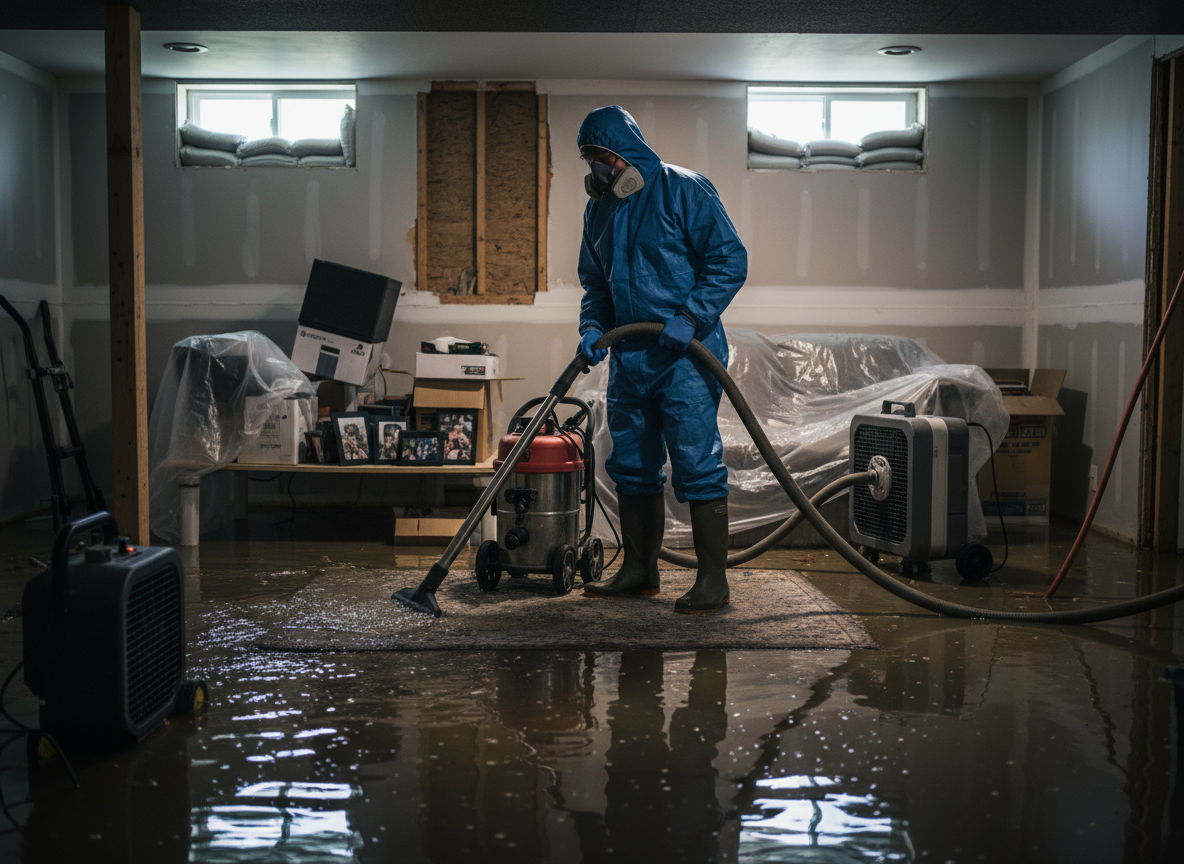
Summer monsoon storms drop heavy rain on the benches above Cottonwood and Olympus Hills Park, sending runoff across yards and into window wells or garage slabs. We stage air movers and dehumidifiers sized for the square footage and monitor relative humidity hourly because the semi-arid air can dry surfaces too quickly and leave hidden pockets still wet. In Millcreek and Cottonwood Heights split-levels, we also check the lower-level mechanical rooms where condensate lines from furnaces and water heaters frequently overflow onto finished floors.
After any standing water is removed we document the affected materials and separate salvageable items from those that must be discarded per Utah health guidelines on porous materials. Homeowners in the 84121 zip code receive a written scope that lists every room, moisture reading, and equipment placement so insurance adjusters see exactly what was done and why.
We return 48 hours later to recheck readings and pull equipment only when all surfaces read within three percent of unaffected areas. This step prevents callbacks that occur when drying is stopped too soon in the thick plaster walls typical of older Holladay stock.
Technician insight
In Holladay the thing that catches most people out with water cleanup services is the way snow melt from Olympus Hills Park runs across yards and pools against the north side of 1960s ranch houses; the water enters through the stem wall and travels under the slab, so if you only dry the visible carpet the floor stays wet for weeks.
Snow-melt seepage near Holladay City Park
A homeowner in a 1972 ranch off Highland Drive noticed damp carpet along the north wall after a warm January thaw. We found water had entered under the slab from yard runoff and wicked into the particleboard subfloor. Extraction and targeted drying under the toe-kicks prevented mold growth; the floor was saved without full replacement.
How it works
- 1
Arrival and Containment
Technicians arrive in marked vans, set up containment barriers, and locate the water source before any extraction begins.
- 2
Water Extraction
Submersible pumps and wand extractors remove standing water from carpets, hard surfaces, and crawl spaces common in Mount Olympus homes.
- 3
Moisture Mapping
We scan walls, floors, and ceilings with meters to chart every wet area, including hidden cavities behind drywall in Cottonwood Heights split-levels.
- 4
Drying and Monitoring
Industrial air movers and dehumidifiers run with daily readings until all materials reach normal moisture content.
- 5
Final Verification
Equipment is removed only after a second full scan confirms the structure is dry and documentation is provided to the homeowner.
Pricing
Pricing depends on affected square footage, number of rooms, and whether hidden cavities require wall or floor removal; we provide an upfront written scope before work begins.